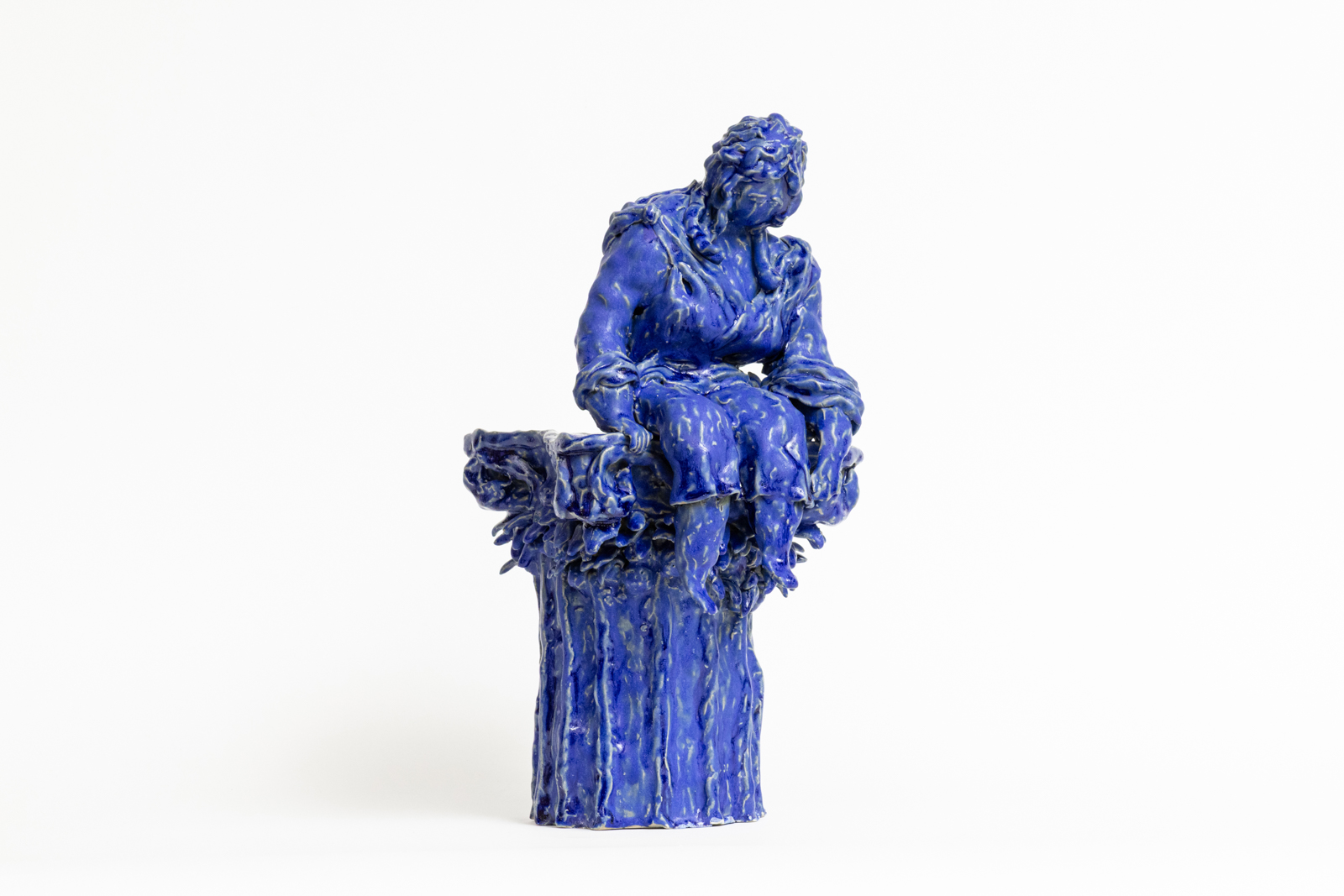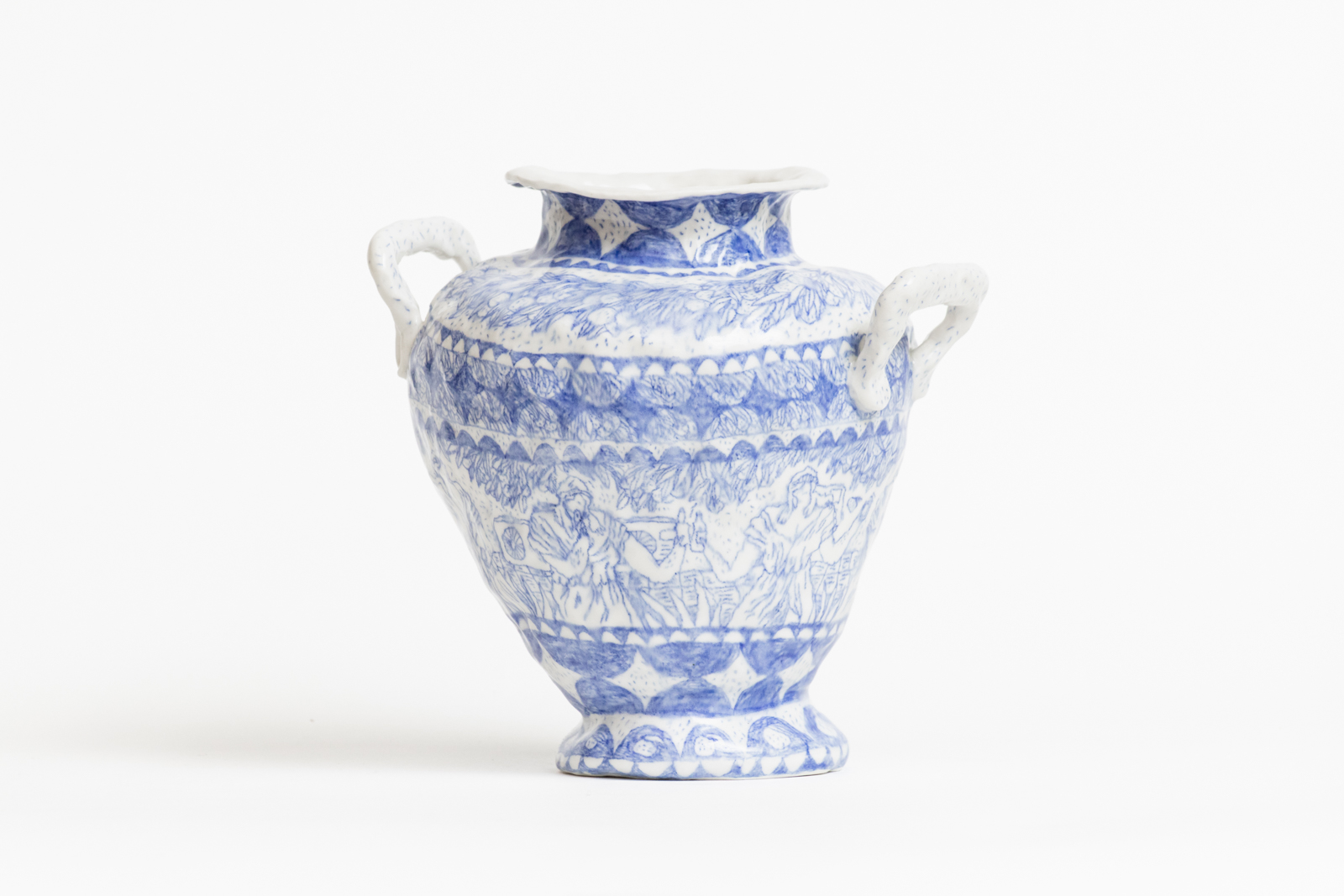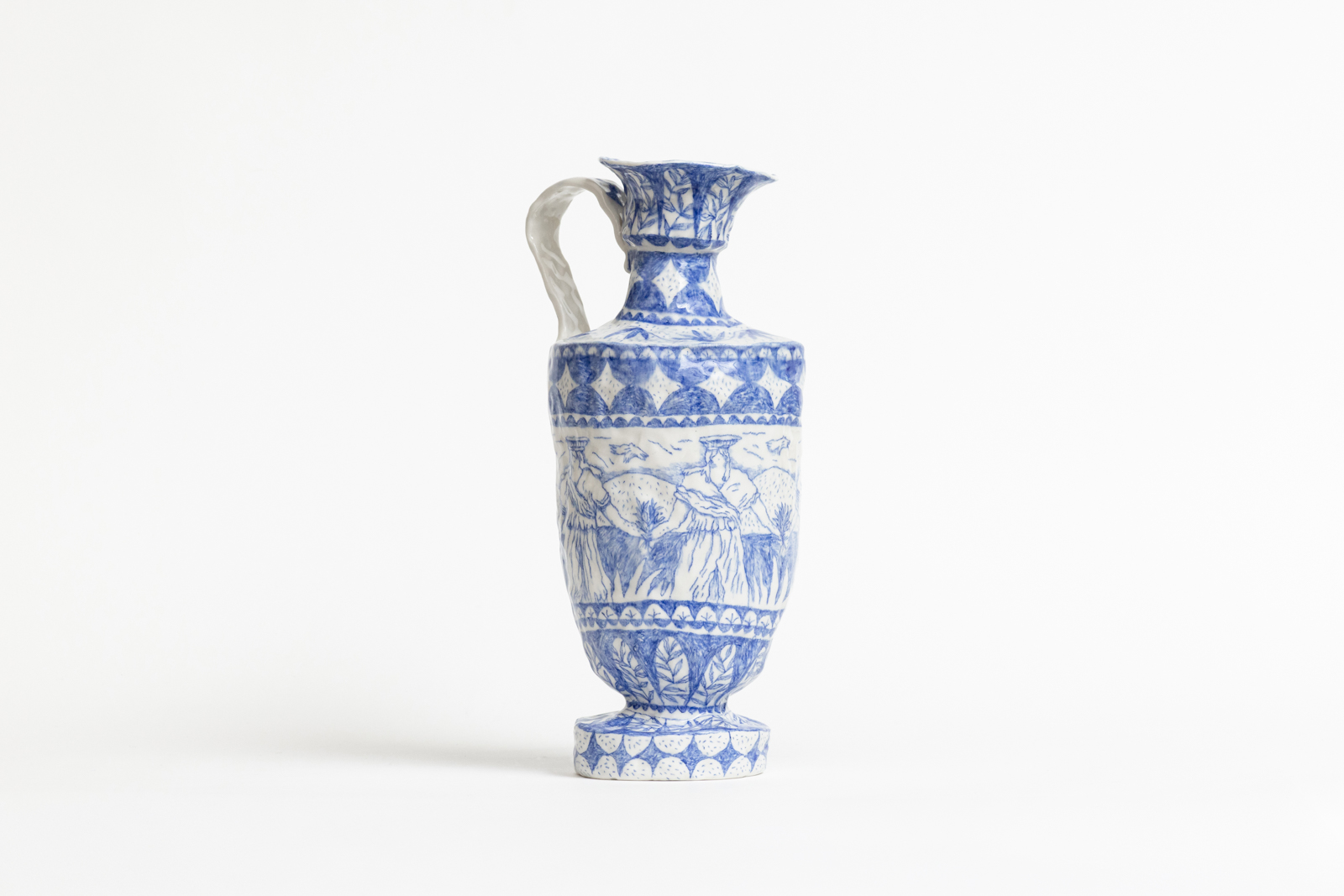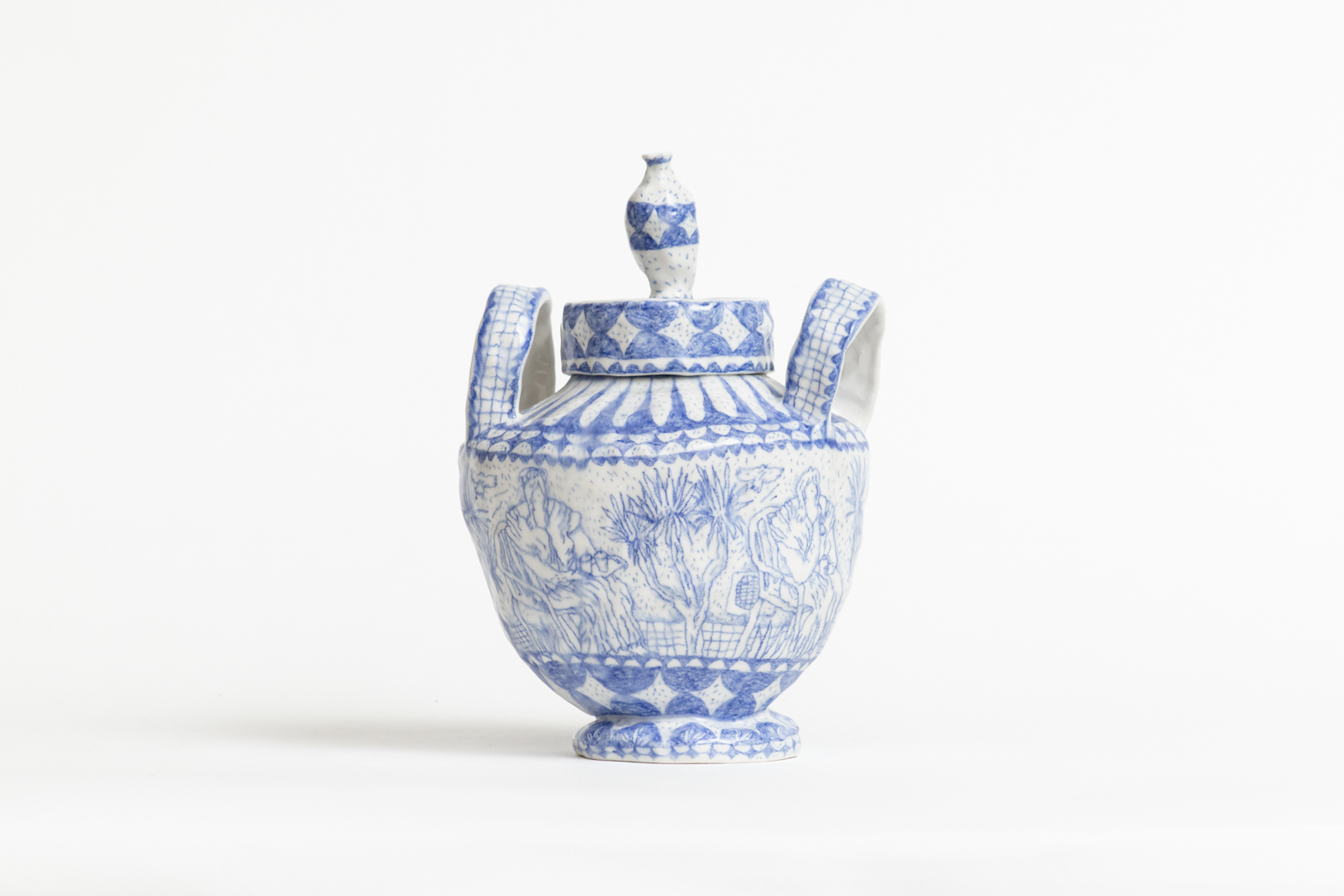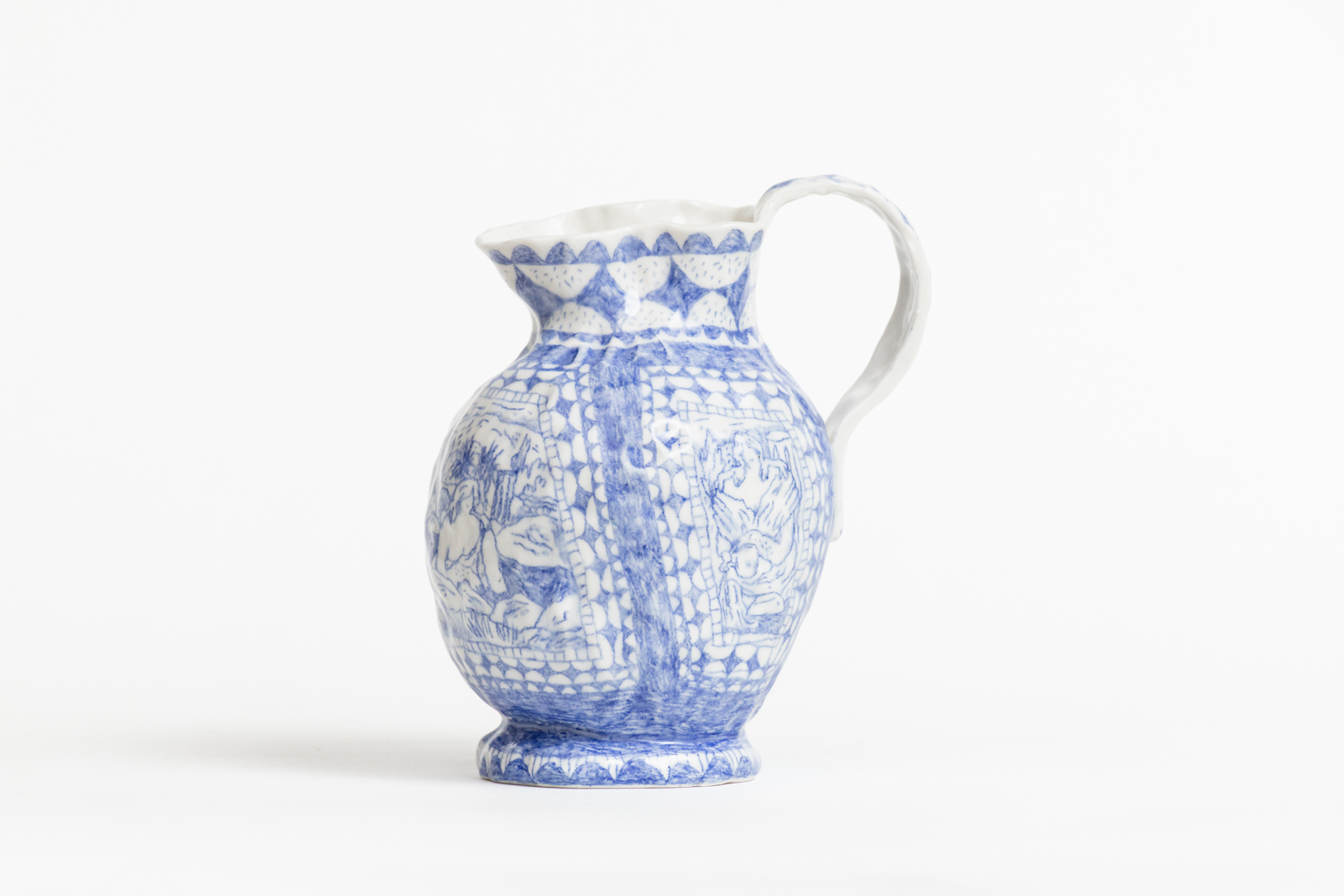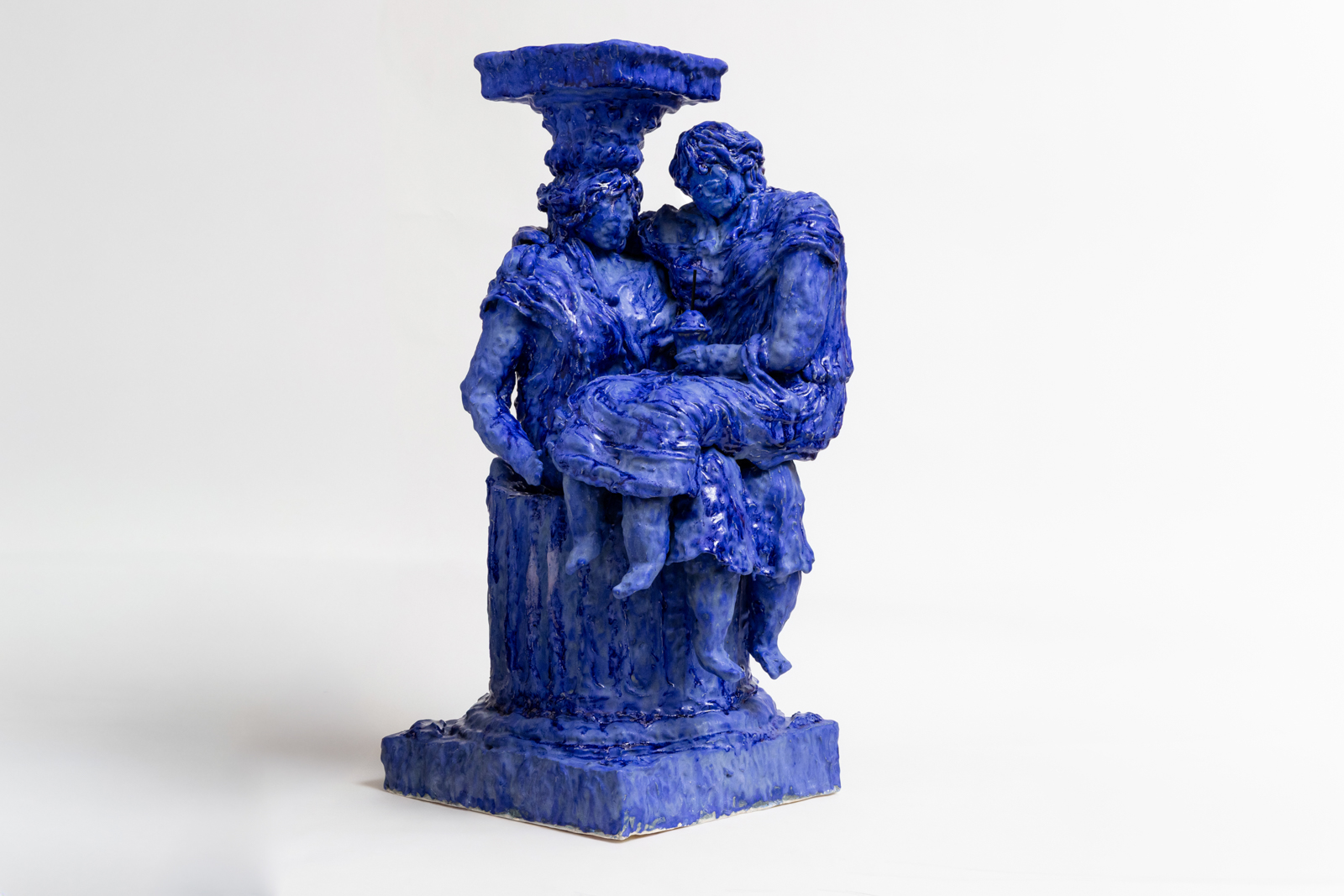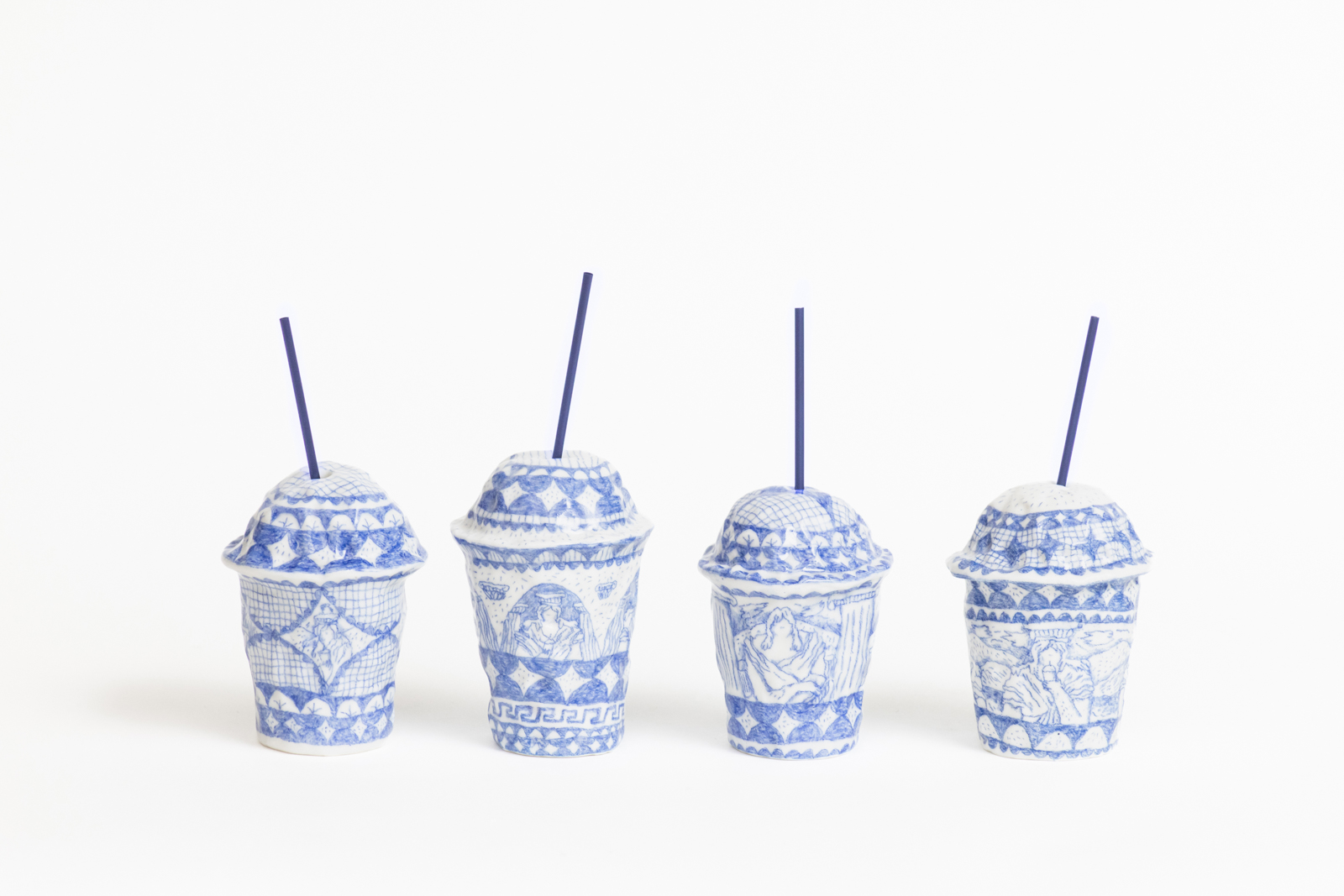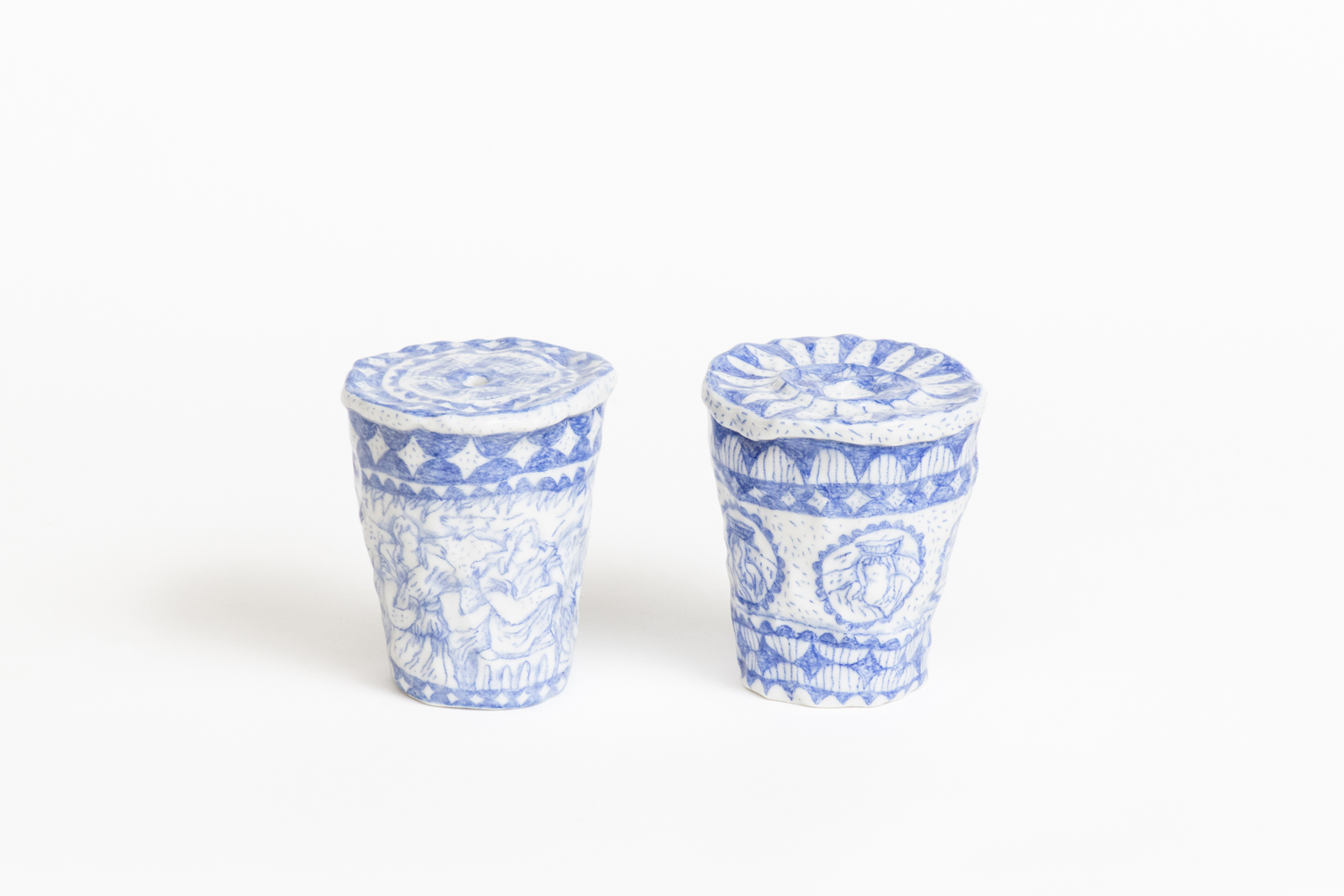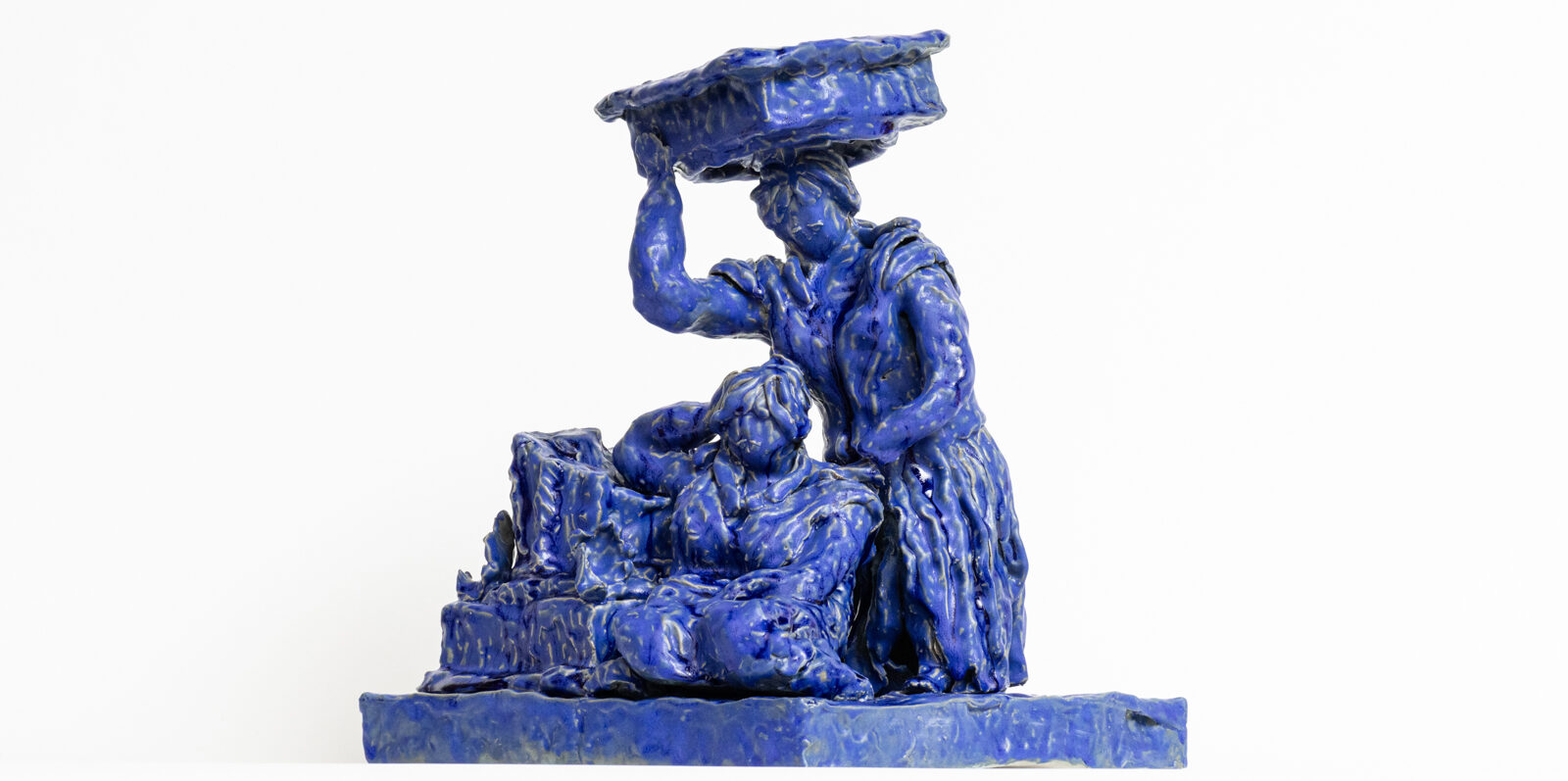
French artist Capucine Pageron brings the ancient caryatid into the rhythms of the contemporary city. With humour, irony, and tenderness, Pageron imagines what happens when figures accustomed to carrying monumental marble finally take a break.
A solo presentation by Capucine Pageron.
With humour, irony, and tenderness, Pageron imagines what happens when figures accustomed to carrying monumental marble finally take a break.
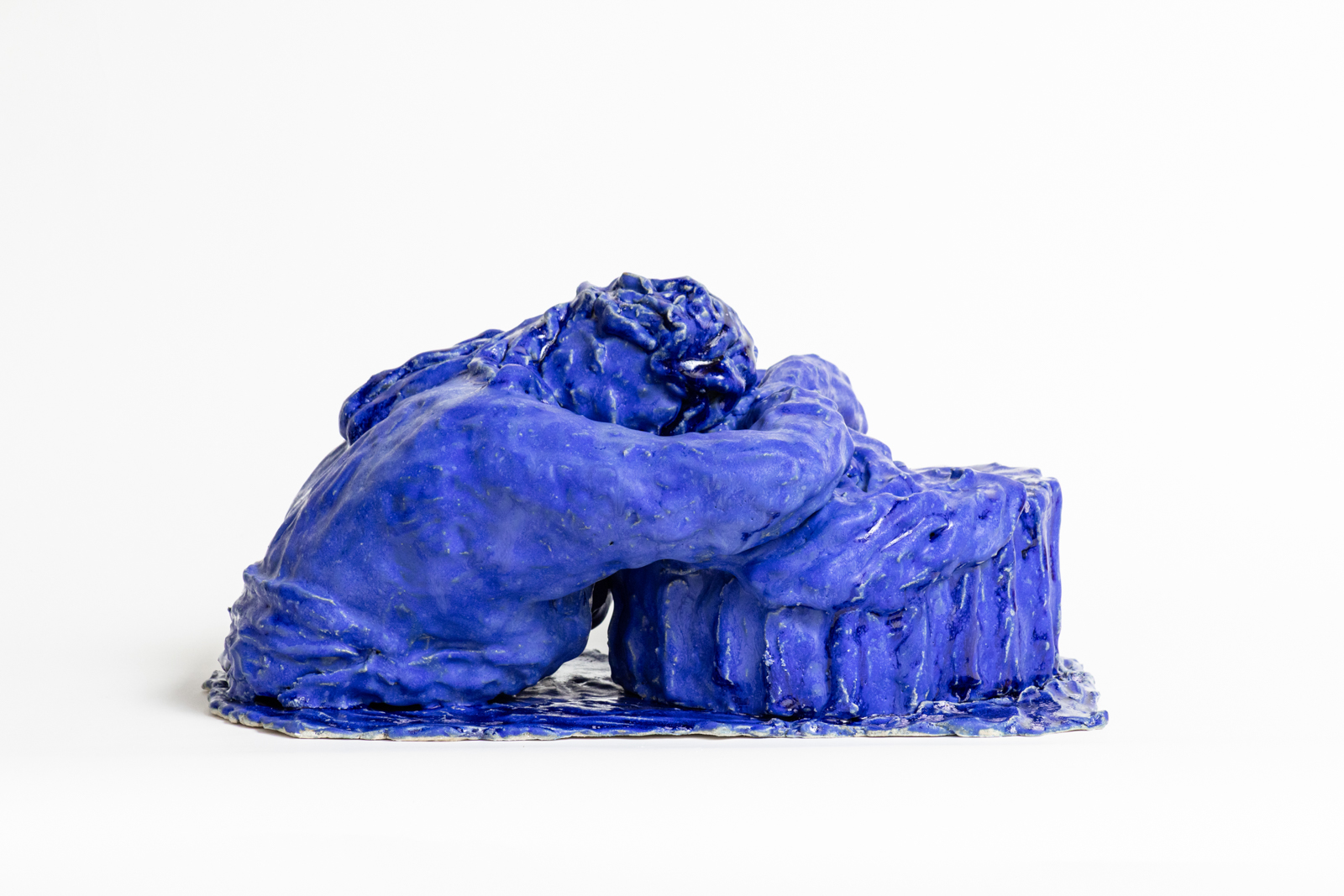
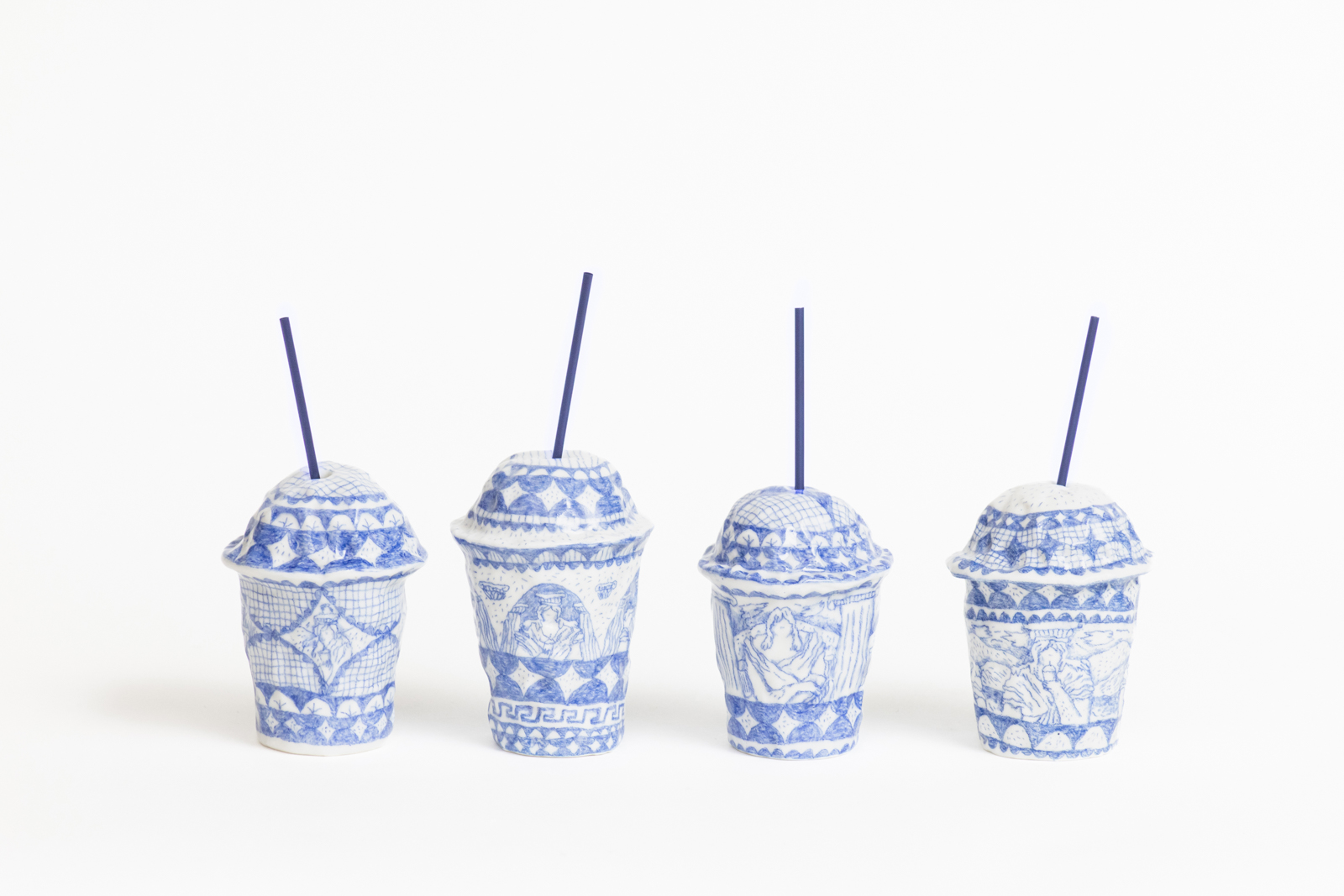
In her parallel narrative, the caryatids step away from their architectural duties. They relax outside souvenir shops, drink freddo espressos, or collapse into one another, exhausted by the work of holding everything up. The monumental becomes everyday. A supporting body needs somewhere to lean, an emblem of endurance is tired, and a figure associated with permanence wants a moment to herself. Their pause introduces a playful but pointed question. How long can anyone be expected to keep carrying?
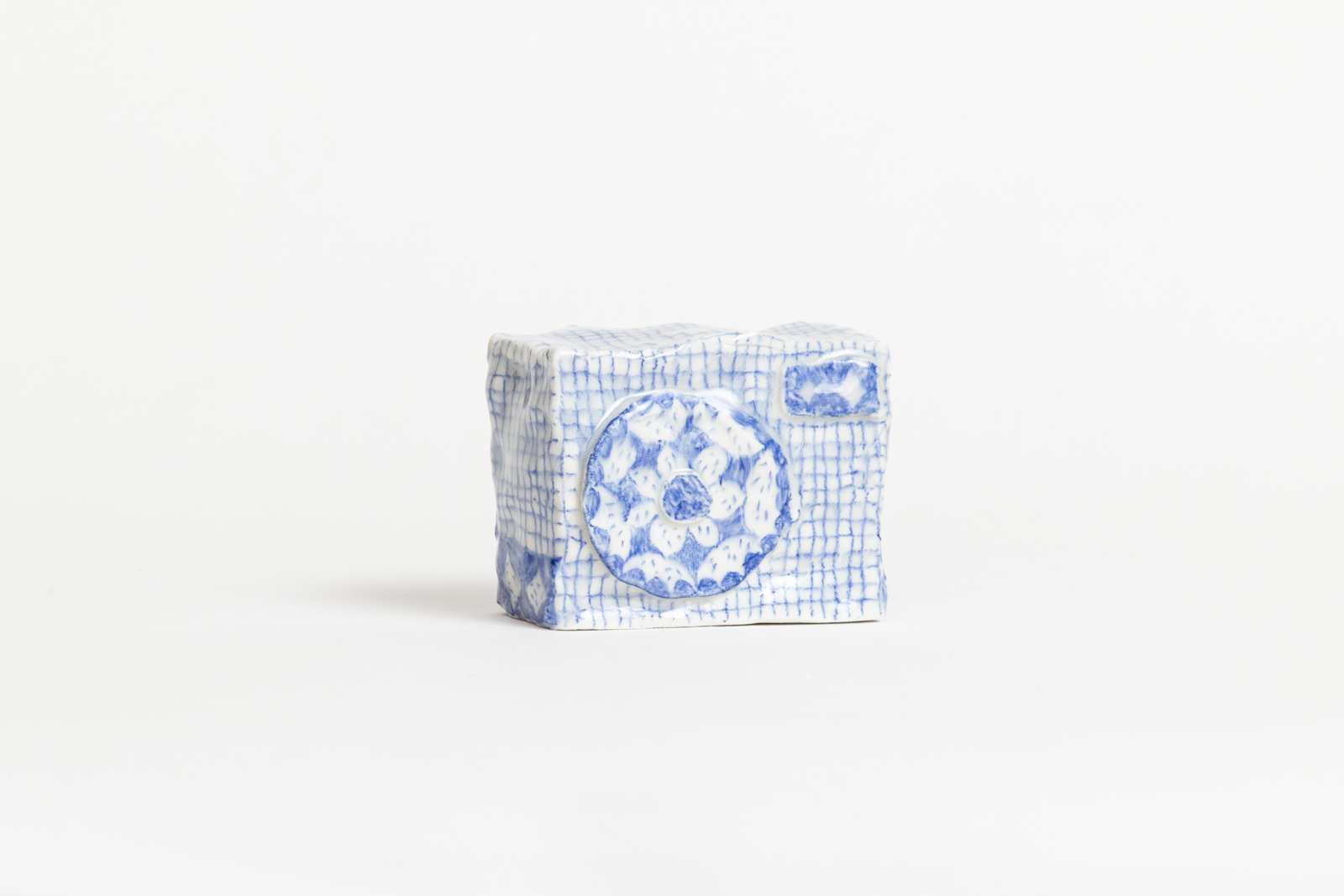
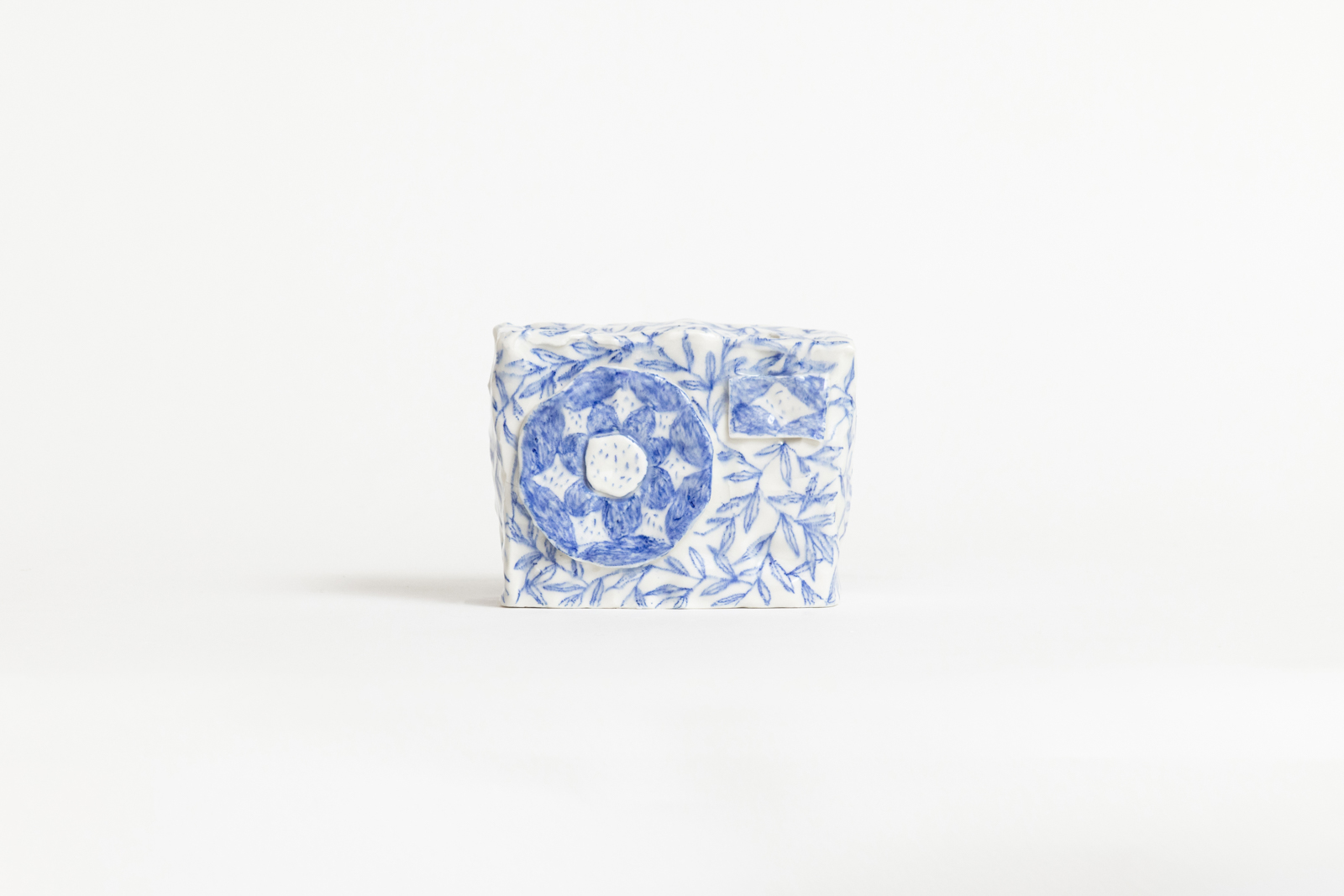
This imagined world emerged from Pageron’s encounters with Athens in June. Wandering through the streets surrounding the studio and around the Acropolis, she observed the coexistence of ancient heritage and a contemporary city increasingly shaped by tourism and an expanding hospitality sector. Souvenir shops overflowed with resin replicas of antiquities, miniature monuments, and magnets. Classical forms appeared again and again, densely arranged across shelves and displays. The restraint Pageron perceived in ancient forms met the visual excess of their contemporary multiplication.
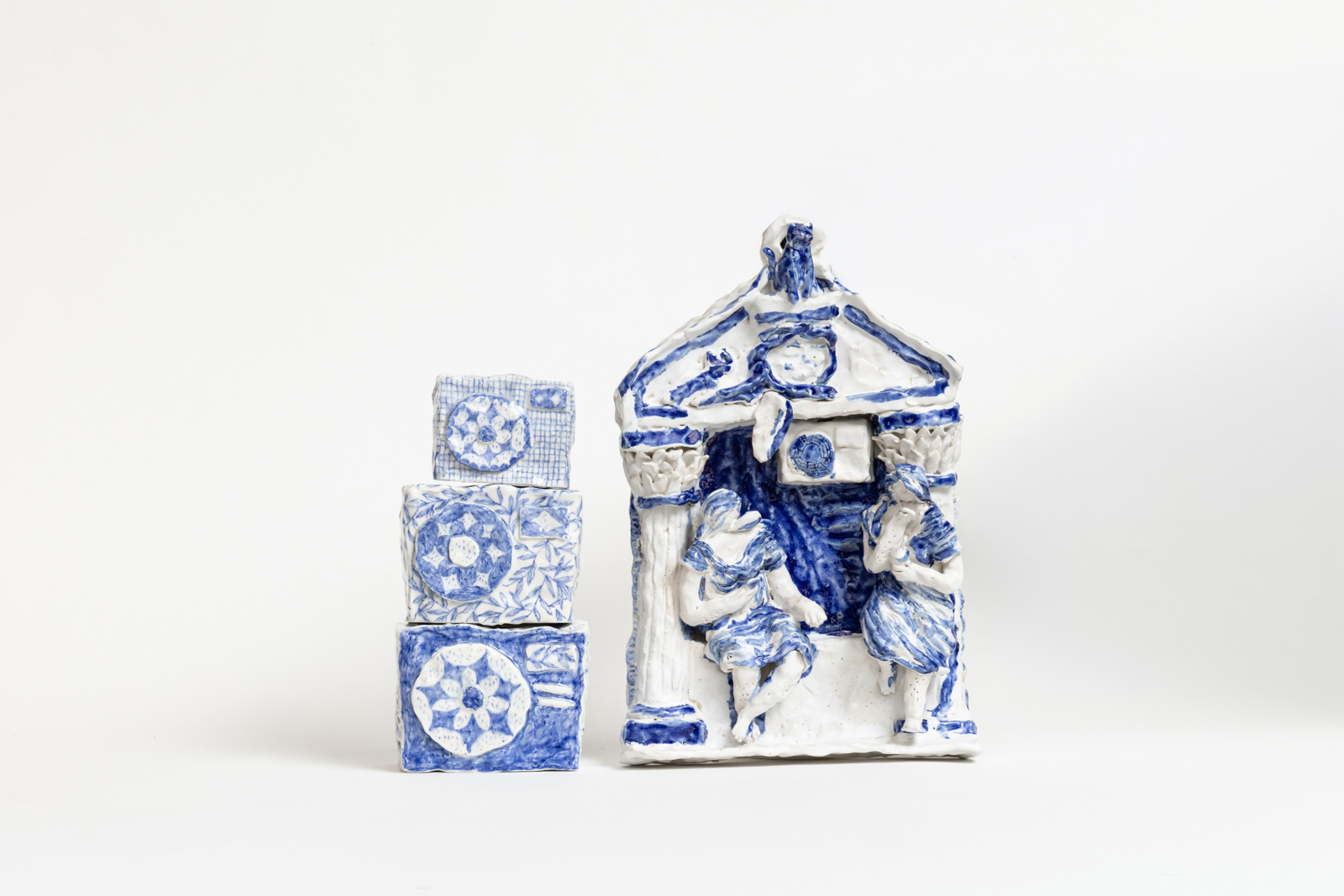
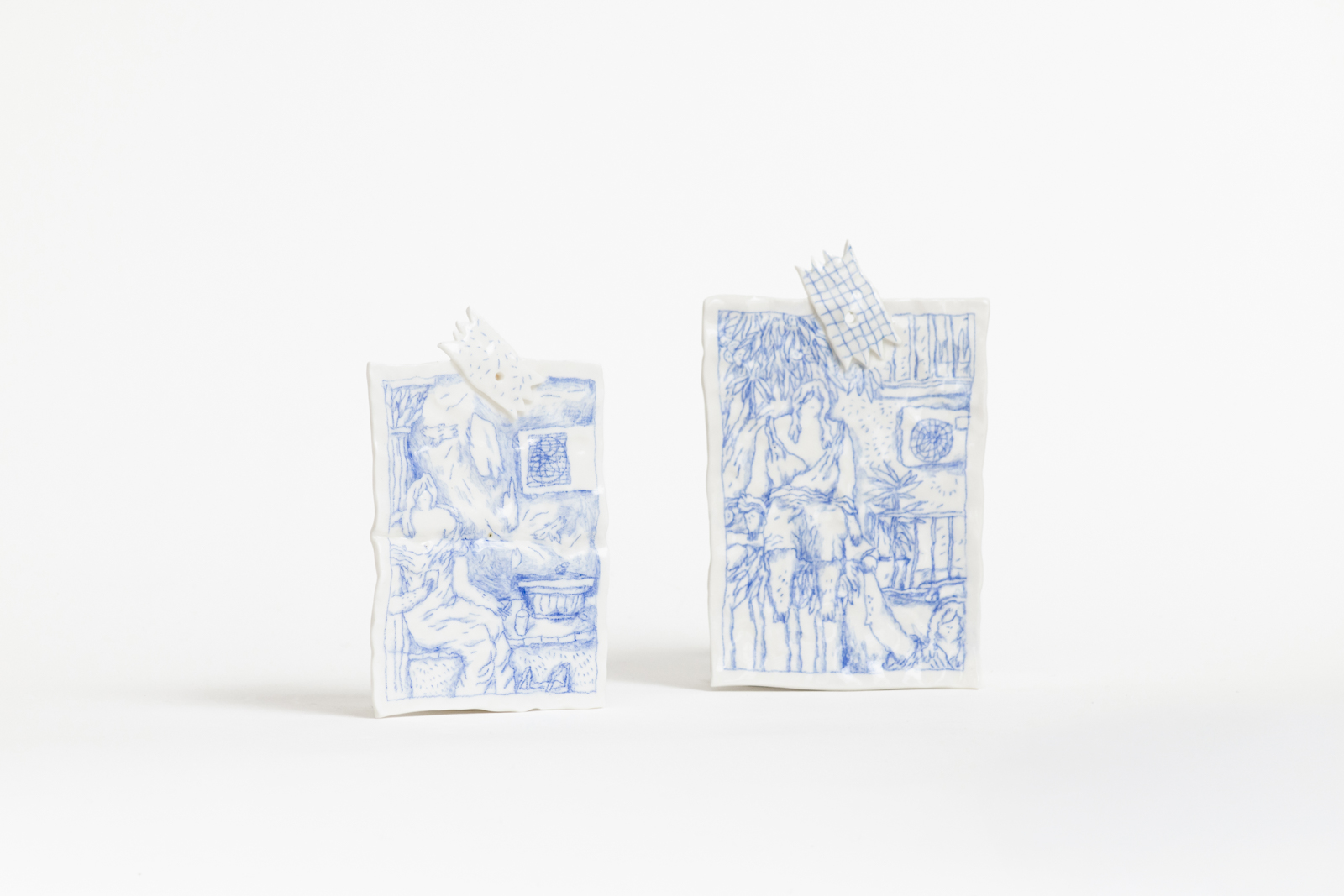
Around these crowded displays, daily life continued. External air-conditioning units, awkwardly mounted on building façades, were dripping water onto already slippery pavements. Athenians carrying freddo espressos threaded their way through crowds of visitors. Bitter-orange trees, a familiar presence along the city’s streets, stood laden with ripe fruit left unpicked. These details enter the atmosphere of Pageron’s stories, where the celebrated image of Athens meets the improvised, sometimes absurd experience of moving through it.
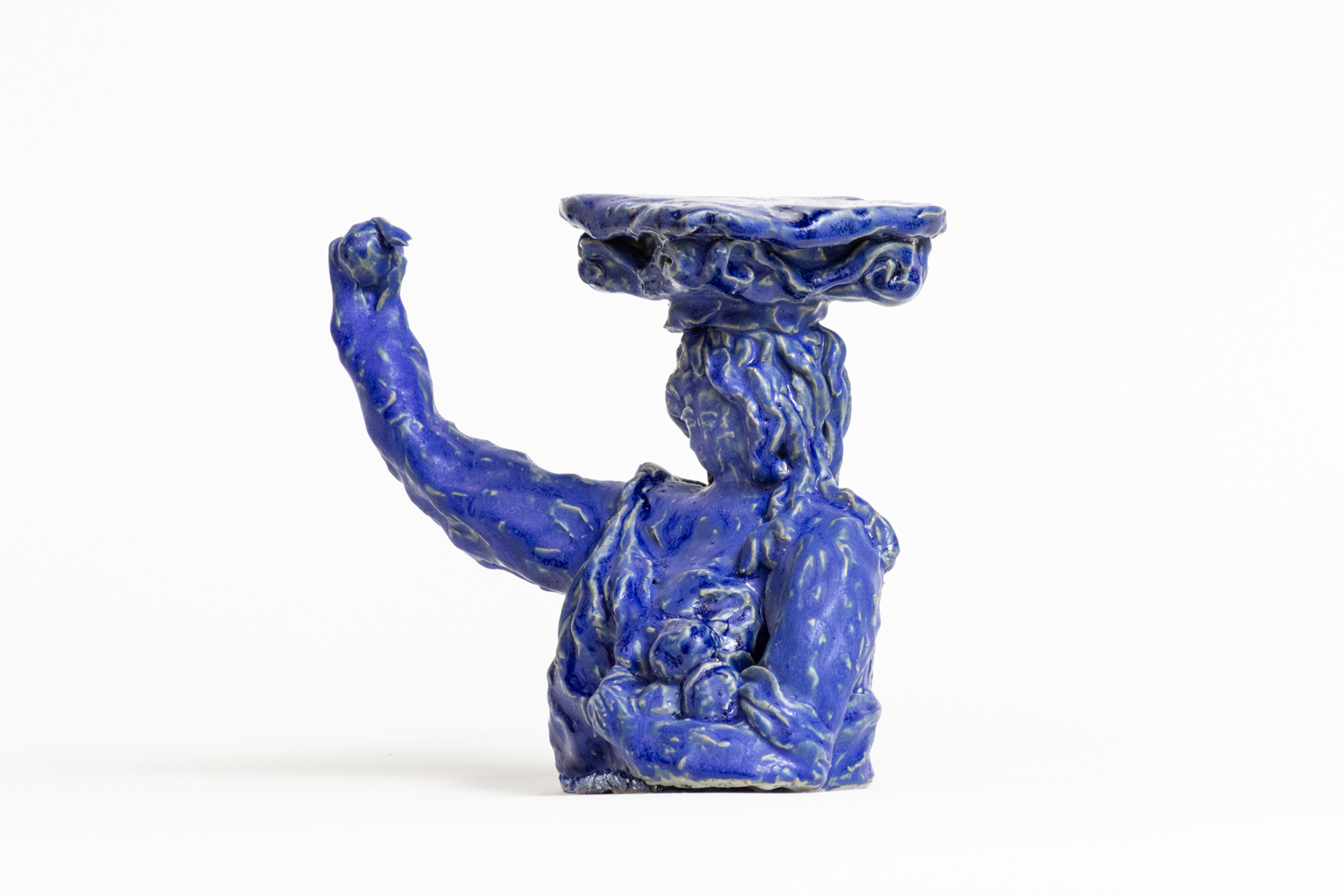
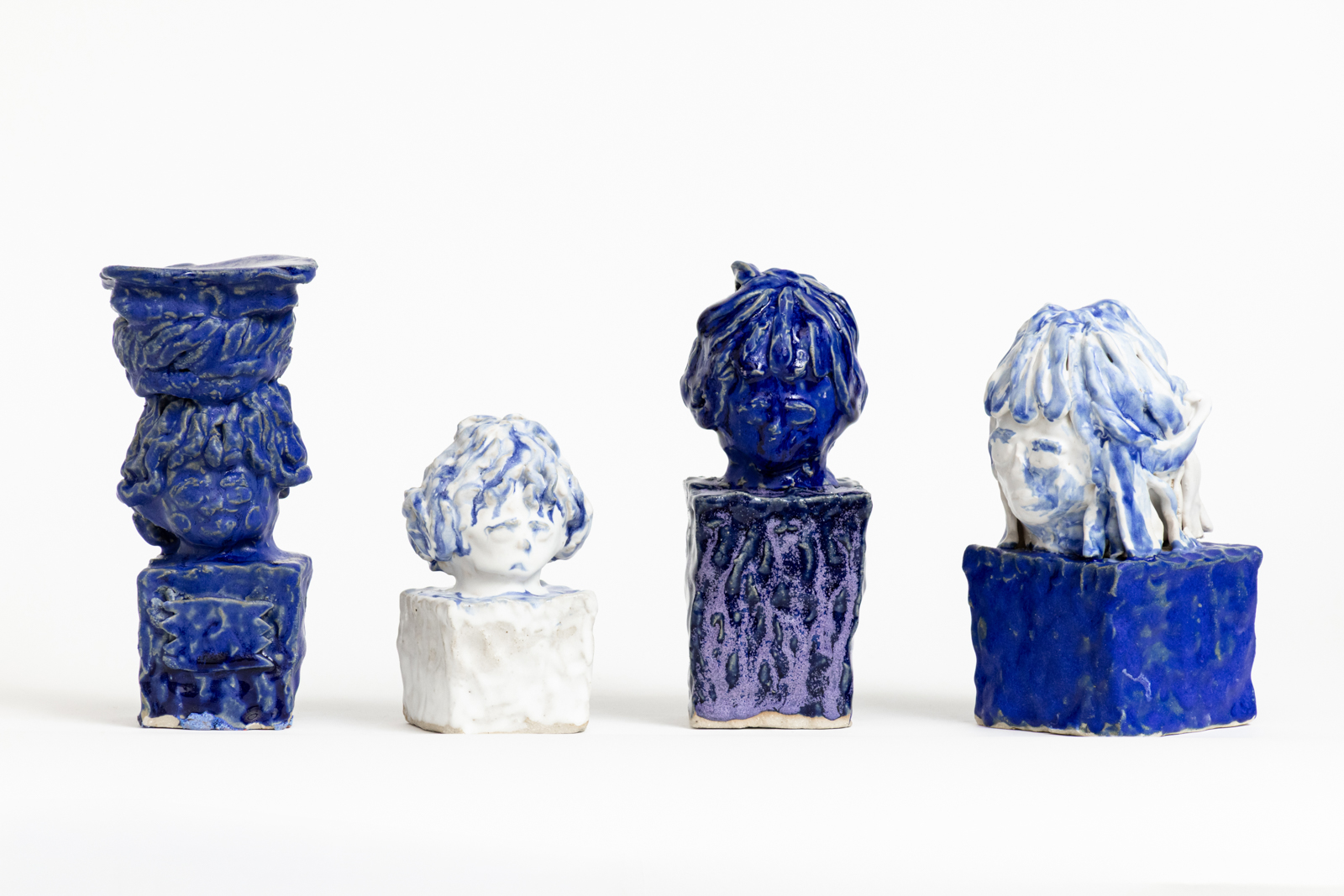
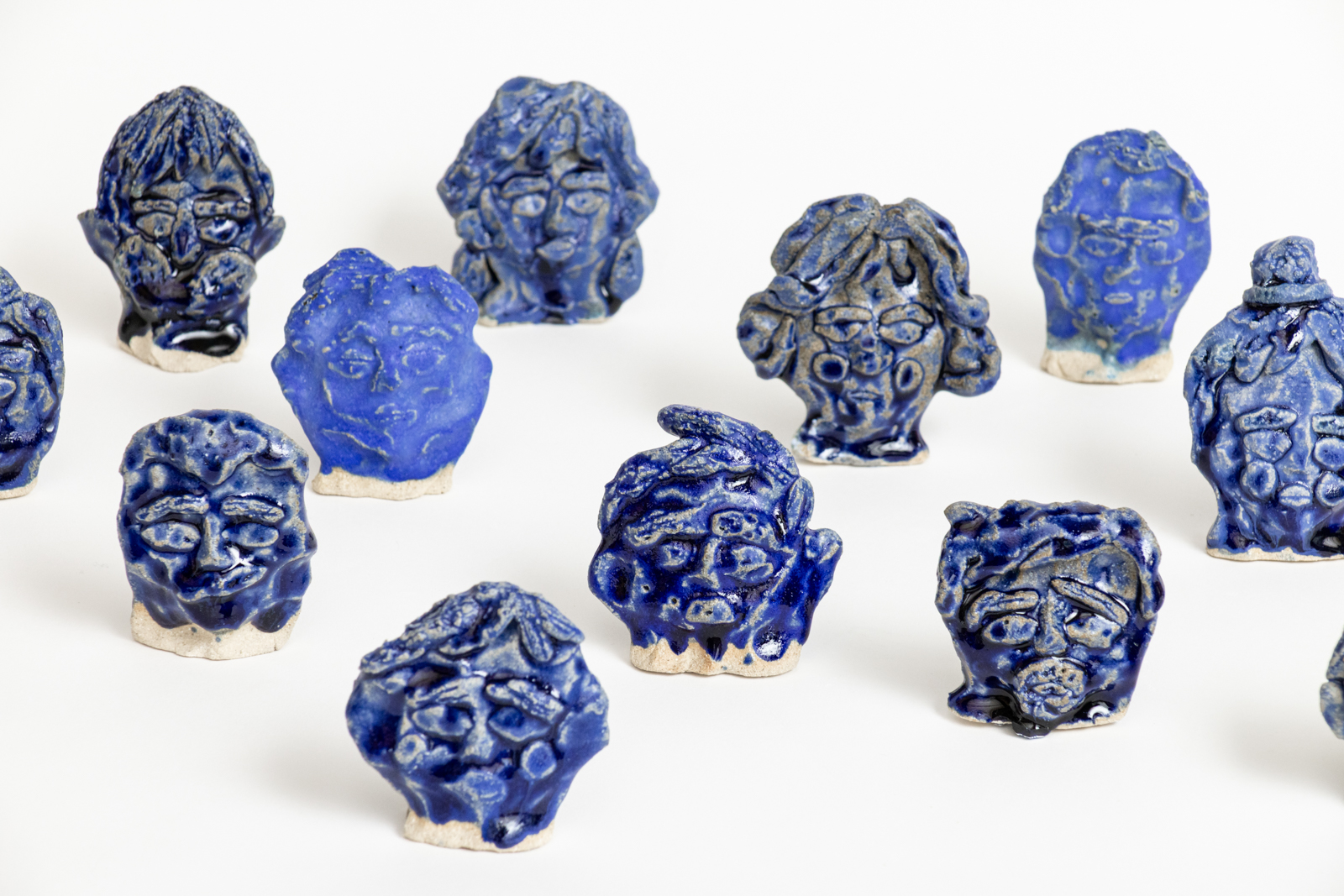
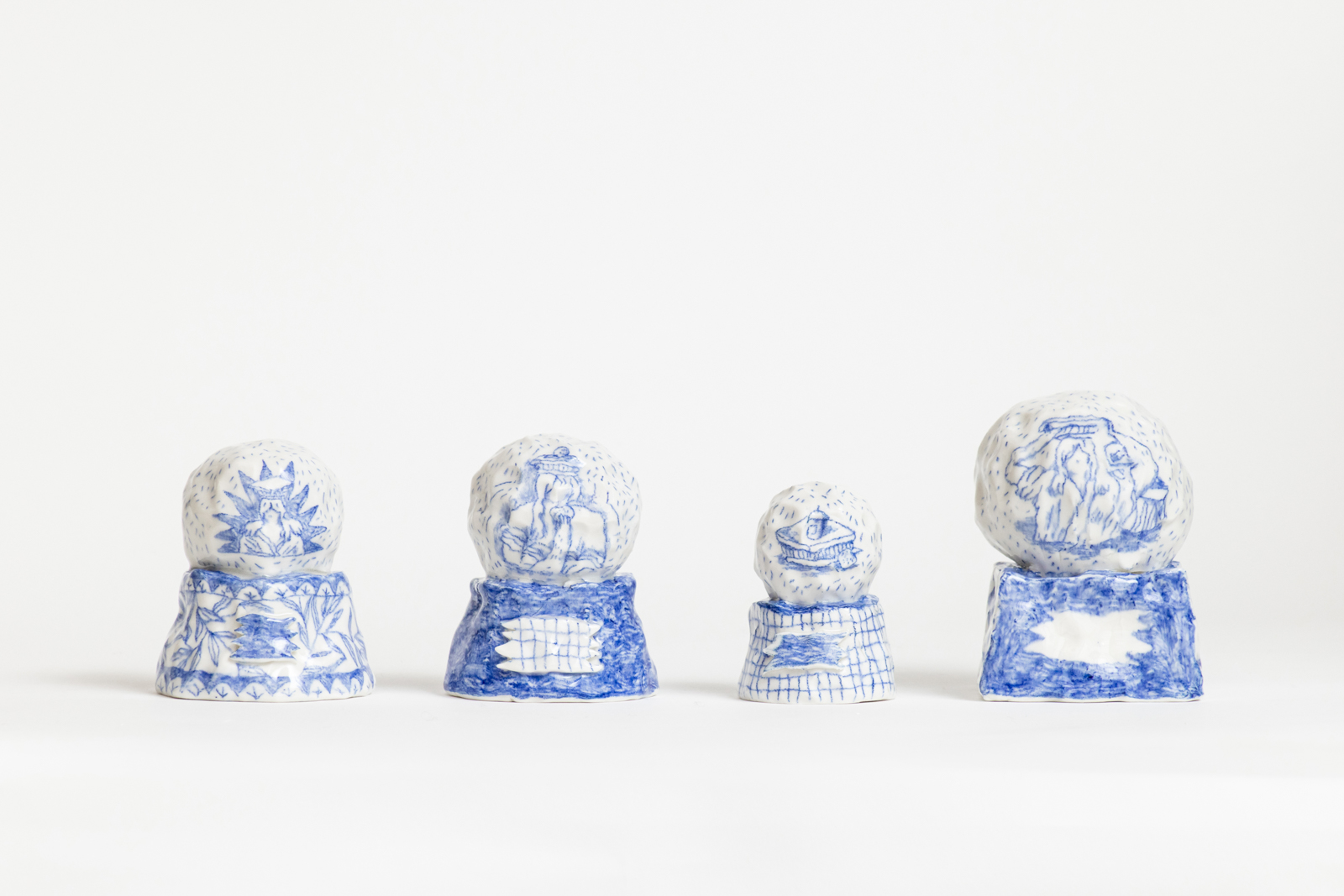
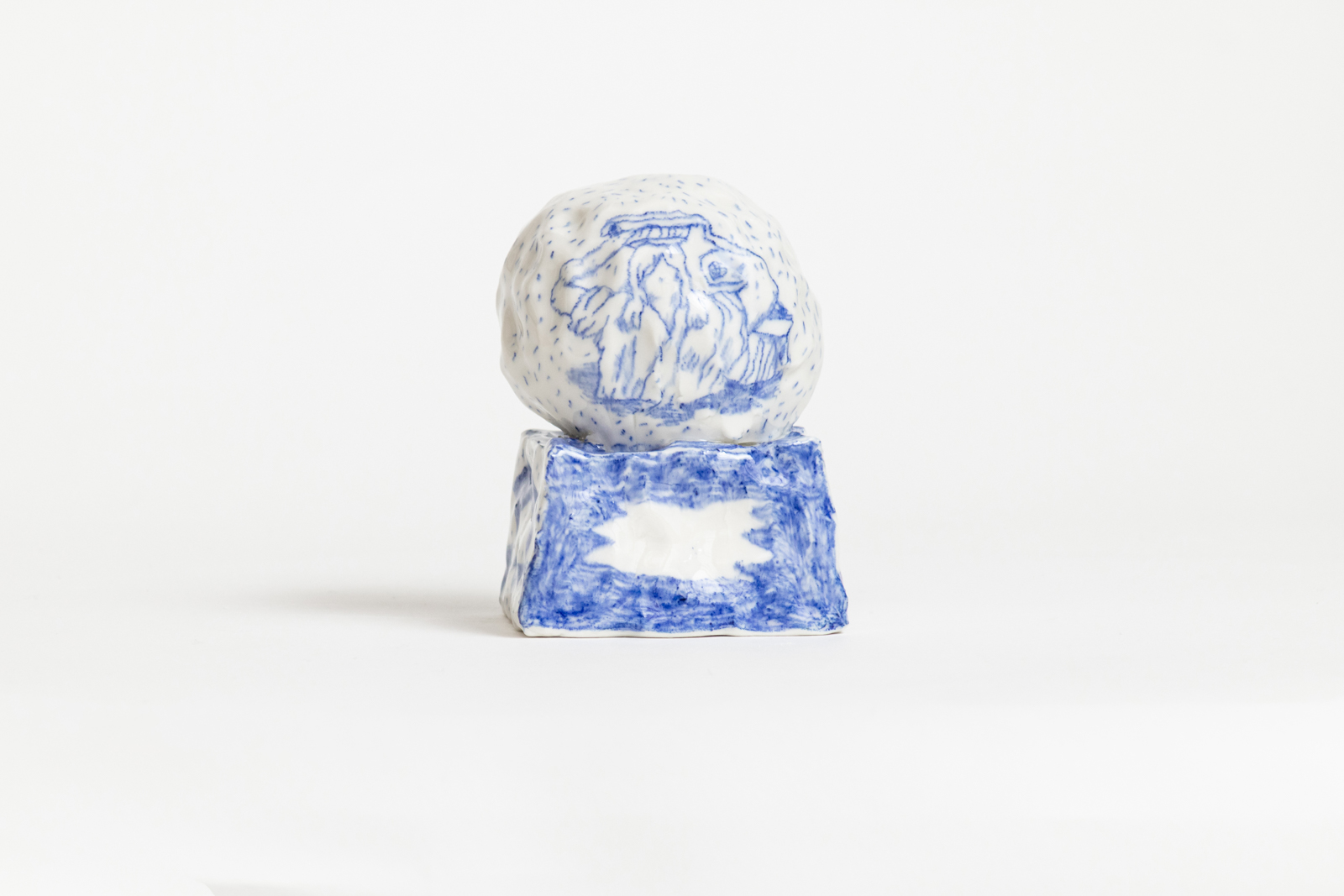
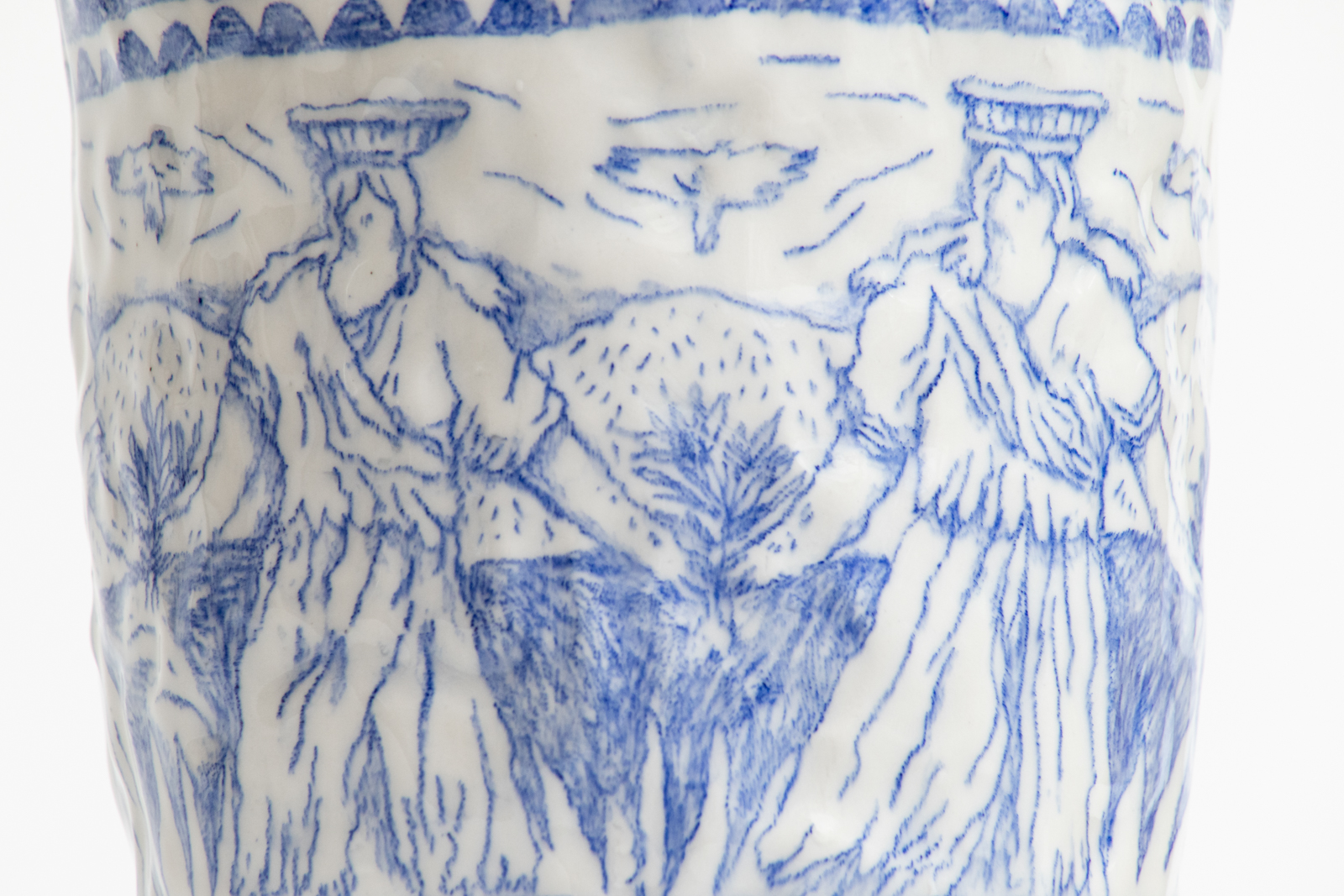
At the centre of the presentation are blue female figures and porcelain vessels that draw on the forms of ancient Greek pottery. Pageron uses cobalt ink, cobalt oxide pencil, and glazes she prepares by hand, often blending glossy and matte glazes. For this body of work, she works exclusively in blue. The figures become characters in scenes of rest, fatigue, companionship, and temporary refusal. Their gestures bring the distant authority of the monument into the familiar language of a coffee break.
Humour gives these scenes their critical force. The caryatid’s role as an architectural support becomes a way to consider the expectations placed on female bodies to sustain, accommodate, care, and endure. When these figures stop working, their fatigue becomes visible. As they lean against or tumble into one another, a quiet sense of sisterhood emerges. The figures who spend their days holding everything up can finally lean on each other.
Photographed by Spyros Chamalis